 USD $

Vaginoplasty in Mexico
Search and Compare the Best Clinics and Doctors at the Lowest Prices for Vaginoplasty in Mexico


Find the best clinics for Vaginoplasty in Mexico
With Medijump you can browse 17 facilities offering Vaginoplasty procedures in Mexico.
Vaginoplasty in Cancun
Price: $ 1,100
Vaginoplasty in Guadalajara
Price: $ 1,484
Turkey offers the best prices Worldwide
Price: $ 69

From 5 reviews
María del refugio P., 01 March 2022
The doctors and nurses are very attentive to the patient but those who are at the entrance do not give information to the family and do not let anyone in

From 4 reviews
Amanda, 20 June 2021
Dr. Saldana and the vida staff are amazing! Dr made me feel very comfortable and explained everything to me about the procedure that I was getting.

Mediland Private Clinic, located in Alvaro Obregon, Mexico City, Mexico offers patients Vaginoplasty procedures among its total of 4 available procedures, across 3 different specialties. The cost of a Vaginoplasty procedure starts from £2,899, whilst the national average price is approximately £1,978. There are many specialists available at the Clinic, with 8 in total, and they have multiple recognized accreditations, including: CMGO - Consejo Mexicano de Ginecología y ObstetriciaCMOT - Consejo Mexicano de Ortopedia y TraumatologíaCMORLCCC - Consejo Mexicano de Otorrinolaringología y Cirugía de Cabeza y CuelloSMUG - Sociedad Mexicana de Urología Ginecológica

Hospital Zambrano Hellion, located in Calle Ecuador, Monterrey, Mexico offers patients Vaginoplasty procedures among its total of 215 available procedures, across 27 different specialties. Currently, there's no pricing information for Vaginoplasty procedures at Hospital Zambrano Hellion, as all prices are available on request only, whilst the national average price is approximately ฿87,996. There is currently a lack of information available on the specialists practicing at the Hospital, and they are not accredited by any recognized accreditations institutes

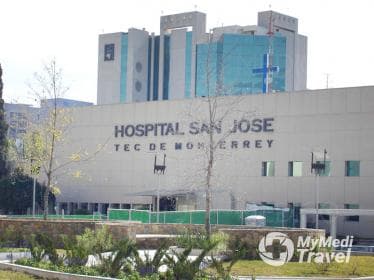
Hospital San Jose Tecnologico de Monterrey, located in Calle Ecuador, Monterrey, Mexico offers patients Vaginoplasty procedures among its total of 255 available procedures, across 30 different specialties. Currently, there's no pricing information for Vaginoplasty procedures at Hospital San Jose Tecnologico de Monterrey, as all prices are available on request only, whilst the national average price is approximately ฿87,996. There is currently a lack of information available on the specialists practicing at the Hospital, and they are accredited by JCI Accredited

Hospital Jerusalem, located in Diego Rivera, Tijuana, Mexico offers patients Vaginoplasty procedures among its total of 21 available procedures, across 4 different specialties. The cost of a Vaginoplasty procedure starts from £3,543, whilst the national average price is approximately £1,978. All procedures and treatments are undertaken by just a small team of specialists, with 3 in total at the Hospital, and they have multiple recognized accreditations, including: AMCC - Academia Mexicana de Cirugia CosmeticaAMCE - Asociación Mexicana de Cirugía LaparoscópicaAMCG - Asociación Mexicana de Cirugía GeneralAMCPER - Asociación Mexicana de Cirugía Plástica, Estética y ReconstructivaCMGO - Consejo Mexicano de Ginecología y ObstetriciaCNCPER - Colegio Noreste de Cirugía Plástica Estética y ReconstructivaCMT - Colegio Medico de Tijuana

Salutaris Medical Center, located in Av Terranova, Guadalajara, Mexico offers patients Vaginoplasty procedures among its total of 51 available procedures, across 12 different specialties. The cost of a Vaginoplasty procedure ranges from ฿1,590 to ฿2,529, whilst the national average price is approximately ฿87,996. There are many specialists available at the Clinic, with 14 in total, and they are not accredited by any recognized accreditations institutes

Panama Plastic Surgery, located in Blvd Kukulcan, Cancun, Mexico offers patients Vaginoplasty procedures among its total of 37 available procedures, across 6 different specialties. The cost of a Vaginoplasty procedure ranges from $1,100 to $1,800, whilst the national average price is approximately $2,621. All procedures and treatments are undertaken by just a small team of specialists, with 2 in total at the Clinic, and they are not accredited by any recognized accreditations institutes

Plastic Surgery Tijuana - Luis Suarez, located in Diego Rivera, Tijuana, Mexico offers patients Vaginoplasty procedures among its total of 18 available procedures, across 2 different specialties. Currently, there's no pricing information for Vaginoplasty procedures at Plastic Surgery Tijuana - Luis Suarez, as all prices are available on request only, whilst the national average price is approximately $2,621. All procedures and treatments are undertaken by just a small team of specialists, with 3 in total at the Hospital, and they have multiple recognized accreditations, including: AMCPER - Asociación Mexicana de Cirugía Plástica, Estética y ReconstructivaCMCPER - Consejo Mexicano de Cirugía Plástica, Estética y ReconstructivaCNCPER - Colegio Noreste de Cirugía Plástica Estética y ReconstructivaCMT - Colegio Medico de TijuanaASPS - American Society of Plastic Surgeons

Blue Hospital, located in Diego Rivera, Tijuana, Mexico offers patients Vaginoplasty procedures among its total of 51 available procedures, across 9 different specialties. Currently, there's no pricing information for Vaginoplasty procedures at Blue Hospital, as all prices are available on request only, whilst the national average price is approximately $2,621. There are many specialists available at the Hospital, with 8 in total, and they have multiple recognized accreditations, including: AMCPER - Asociación Mexicana de Cirugía Plástica, Estética y ReconstructivaASPS - American Society of Plastic Surgeons
WHY US?
At Medijump, we're making medical easy. You can search, compare, discuss, and book your medical all in one place. We open the door to the best medical providers worldwide, saving you time and energy along the way, and it's all for FREE, no hidden fees, and no price markups guaranteed. So what are you waiting for?

Free

Best Price

Widest Selection

Risk-Free
What you need to know about Vaginoplasty in Mexico

Vaginoplasty can mean a lot of different things. In general, however, it is any surgical procedure performed to construct or reconstruct the vagina. This surgery can be performed to treat numerous situations, correcting congenital defects to the vagina, urethra, and rectum. Sometimes, a vaginoplasty is required after vaginectomy for vaginal cancer in order to restore a normal vaginal function and structure. The surgery can be performed to treat babies born with a microphallus. For cosmetic purposes, it may be done to tighten the vagina after childbirth.
Vaginoplasty can also be performed on transgender and non-binary people who are interested in male-to-female (MtF) sex reassignment surgery. In MtF sex reassignment surgery, vaginoplasty is the process in which a surgeon constructs a vaginal cavity between the urethra and the rectum. Vaginoplasty aims to create a vagina from penile tissue.
Before vaginoplasty, you may have congenital defects to the vagina or you want to tighten your vagina after childbirth or you have had a vaginectomy to treat vaginal cancer. After vaginectomy, all of the problems will be addressed, and the structure and function of your vagina will be restored. If you have the procedure as part of MtF sex reassignment surgery, the procedure may complete your transition.
What does a Vaginoplasty Procedure Involve?
Vaginoplasty may be performed under general or local anesthesia. The anesthesia used for vaginoplasty is mostly determined by the purpose of the surgery.
There a number of different ways to perform vaginoplasty, depending on the purpose of the surgery. If the procedure is performed to tighten the vagina, your surgeon may remove extra skin from inside the vagina and tighten the tissues with strong sutures. Vaginoplasty to construct the vagina, such as for sex reassignment surgery, for women who have had a vaginectomy, or for women who were born without a vagina, several techniques may be offered, including:
- Peritoneal vaginoplasty – the lining of the abdominal cavity, known as the peritoneum, is used to create the vagina. It is usually performed as a laparoscopic procedure.
- Intestinal or sigmoid vaginoplasty – this technique uses a section of the sigmoid colon to create the vagina. It is often performed as laparoscopic surgery.
- McIndoe vaginoplasty – a skin graft is used to line the vagina during this technique. The skin graft is placed on a vaginal mold, then it is placed into a space that has been opened to become the vagina.
- Penile inversion vaginoplasty – this technique is only used in transgender women. It uses the skin from the outside of the penis to create the lining of the vagina. The bulbous tip of the penis is reshaped to make a clitoris and the scrotal skin is used to create the labia majora and minora. The remaining parts of the penis are amputated and discarded.
How Long Should I Stay in Mexico for a Vaginoplasty Procedure?
Vaginoplasty can be a complex procedure and it may last between 7 and 10 hours. Depending on the reason for your vaginoplasty, you may need to stay in the hospital for 3 to 5 days. The recommended length of stay in Mexico is around 2 to 4 weeks because you need to attend follow-up checkups.
What's the Recovery Time for Vaginoplasty Procedures in Mexico?
The patient’s recovery time is different and you should be able to move around within 2-3 days. On average, the total recovery period after vaginoplasty takes around 6 to 8 weeks. During this period, do not take a bath or submerge yourself in water and avoid any strenuous activity. Avoid any sexual activity for 12 weeks. Your doctor will give you the detail of your recovery timeline and when you can resume your normal activity.
What sort of Aftercare is Required for Vaginoplasty Procedures in Mexico?
To speed up your recovery period, it is important that you closely follow the post-operative instruction your surgeon provides. You should always keep your genital area clean and dry. Your surgeon may give you pain medication to help ease discomfort, make sure to take it as prescribed. You may also need to douche one to two times a week using a non-scented vaginal douche.
If you had penile inversion vaginoplasty, your surgeon will give you a vaginal dilator to be used daily at least for a year to maintain the desired vaginal depth. You can use the device as soon as your bandages are removed and your surgeon will give you a dilation schedule.
Remember that you have to wipe or wash the genital area front to back for the rest of your life. This helps prevent infection from the anal region.
What's the Success Rate of Vaginoplasty Procedures in Mexico?
Vaginoplasty is safe and has a high success rate. However, as with other surgeries, the procedure carries some risks and complications. These include bleeding, infection, rupture of the sutures, skin or clitoral necrosis, urinary retention, vaginal prolapse, fistulas, ongoing pain, scarring, and permanent changes in sensation.
Are there Alternatives to Vaginoplasty Procedures in Mexico?
The alternative to vaginoplasty depends on the reason you have the surgery. If you want to tighten the vagina, you may be able to get similar results through vaginal tightening exercise and a healthy diet plan. For trans-women who do not plan to have deep vaginal penetration, a procedure called orchiectomy can be an alternative. This procedure removes the testicles and reduces testosterone levels.
Whilst the information presented here has been accurately sourced and verified by a medical professional for its accuracy, it is still advised to consult with your doctor before pursuing a medical treatment at one of the listed medical providers
No Time?
Tell us what you're looking for and we'll reachout to the top clinics all at once
Enquire Now

Popular Procedures in Mexico
Prices Start From $218

Prices Start From $2,473
Prices Start From $1,795
Prices Start From $1,273
Recommended Medical Centers in Mexico for Vaginoplasty

- Interpreter services
- Translation service
- Religious facilities
- Medical records transfer
- Medical travel insurance
- Health insurance coordination
- TV in the room
- Safe in the room
- Phone in the room
- Private rooms for patients available

- Interpreter services
- Translation service
- Religious facilities
- Medical records transfer
- Medical travel insurance
- Health insurance coordination
- TV in the room
- Safe in the room
- Phone in the room
- Private rooms for patients available

- Interpreter services
- Translation service
- Religious facilities
- Medical records transfer
- Medical travel insurance
- Health insurance coordination
- TV in the room
- Safe in the room
- Phone in the room
- Private rooms for patients available

- Interpreter services
- Translation service
- Religious facilities
- Medical records transfer
- Medical travel insurance
- Health insurance coordination
- TV in the room
- Safe in the room
- Phone in the room
- Private rooms for patients available

- Interpreter services
- Translation service
- Religious facilities
- Medical records transfer
- Medical travel insurance
- Health insurance coordination
- TV in the room
- Safe in the room
- Phone in the room
- Private rooms for patients available

- Interpreter services
- Translation service
- Religious facilities
- Medical records transfer
- Medical travel insurance
- Health insurance coordination
- TV in the room
- Safe in the room
- Phone in the room
- Private rooms for patients available

- Interpreter services
- Translation service
- Religious facilities
- Medical records transfer
- Medical travel insurance
- Health insurance coordination
- TV in the room
- Safe in the room
- Phone in the room
- Private rooms for patients available

- Interpreter services
- Translation service
- Religious facilities
- Medical records transfer
- Medical travel insurance
- Health insurance coordination
- TV in the room
- Safe in the room
- Phone in the room
- Private rooms for patients available

- Interpreter services
- Translation service
- Religious facilities
- Medical records transfer
- Medical travel insurance
- Health insurance coordination
- TV in the room
- Safe in the room
- Phone in the room
- Private rooms for patients available
- Interpreter services
- Translation service
- Religious facilities
- Medical records transfer
- Medical travel insurance
- Health insurance coordination
- TV in the room
- Safe in the room
- Phone in the room
- Private rooms for patients available