 USD $
USD $

Neurological Rehabilitation in Romania
Search and Compare the Best Clinics and Doctors at the Lowest Prices for Neurological Rehabilitation in Romania


Find the best clinics for Neurological Rehabilitation in Romania
No clinics available
Spain offers the best prices Worldwide
Price: $ 42

WHY US?
At Medijump, we're making medical easy. You can search, compare, discuss, and book your medical all in one place. We open the door to the best medical providers worldwide, saving you time and energy along the way, and it's all for FREE, no hidden fees, and no price markups guaranteed. So what are you waiting for?

Free

Best Price

Widest Selection

Risk-Free
What you need to know about Neurological Rehabilitation in Romania
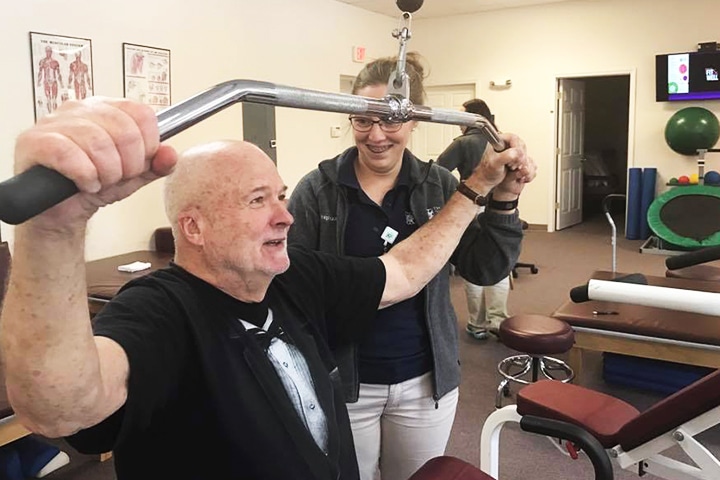
Neurological rehabilitation (rehab) is a treatment that is designed to help improve function, reduce symptoms, and increase the wellbeing of a person with trauma, disorders, or diseases of the nervous system. The goal of neurological rehabilitation is to help you return to the highest level of independence, as well as improving your overall quality of life.
Anyone with a neurological condition may be recommended to undergo neurological rehabilitation by their doctors. Symptoms that may prompt the need for rehab may include pain, muscle weakness, difficulty walking, abnormal muscle tone, difficulty swallowing, difficulty speaking, impairments in memory, impairments in thinking and problem solving, impairments in vision, as well as difficulty with daily activities, such as eating, bathing, toileting, and dressing.
Some of the conditions that may benefit from neurological rehabilitation are as follows:
-
Infections, such as meningitis, brain abscesses, polio, and encephalitis.
-
Vascular disorders, such as subdural hematoma, ischemic strokes, hemorrhagic strokes, and transient ischemic attacks.
-
Trauma, such as spinal cord and brain injury.
-
Functional disorders, such as dizziness, headache, neuralgia, and seizure disorders.
-
Structural or neuromuscular disorders, such as carpal tunnel syndrome, cervical spondylosis, Bell palsy, peripheral neuropathy, brain or spinal cord tumors, myasthenia gravis, Guillain-Barré syndrome, and muscular dystrophy.
-
Degenerative disorders, such as multiple sclerosis, Parkinson's disease, Alzheimer's disease, amyotrophic lateral sclerosis (ALS), and Huntington chorea.
What does the Procedure Involve?
The neurological rehabilitation program is designed to meet your specific needs, depending on your injury or condition. For instance, if you have difficulty walking or standing, a physical therapist will help you learn how to perform these things again. A speech therapist can help you learn to speak or to swallow again. And an occupational therapist can help you shower safely and how to cook meals for yourself. The following are some common things you might learn in neurological rehabilitation:
-
Counseling and therapy to help with social and emotional challenges. These may also include depression, stress, and anxiety management.
-
Exercises to improve balance, strengthen your body, and move safely.
-
New ways to stay physically active with a disability.
-
Instructions on how to safely use walkers, crutches, or a wheelchair.
-
Speech-language therapy to help with talking, communication, language, and swallowing.
-
Bladder and bowel retraining.
-
Help with activities of daily living, such as dressing, bathing, eating, cooking, handwriting, and basic housekeeping.
-
Social and behavioral skills.
-
Nutritional counseling.
How Long Should I Stay in Romania?
Your length of stay in Romania depends on your neurological rehabilitation plan, which depends on your specific individual case. It is important to know that rehab takes time. In some cases, you may need to stay in the country for a full month or more. Your rehab team and medical travel team will be able to advise you on this.
What's the Recovery Time?
Neurological rehabilitation is a treatment to help you recover from your neurological disease, disorder, or injury. Therefore, the recovery time varies from one person to another, depending on the reason you need neurological rehabilitation and your willingness to do the work. For example, stroke patients may need six months until they experience significant improvement and two years until they fully regain their speaking ability.
What About Aftercare?
Neurological rehabilitation can be hard work, both physically and mentally. One day you may feel hopeful and the next day you may feel discouraged. It is important to remember that it will take constant and consistent work and relearning. Your therapist and doctors understand this process and, along with your family and friends, they are there to support you.
After you finish your neurological rehabilitation, you may need to come back now and then for follow-up checkups. Follow-up checkups are important to ensure that you continue to get better.
What's the Success Rate?
Neurological rehabilitation is known to have high success rates. It can help you regain lost skills and function. However, the active involvement of you and your family is essential to the success of the rehabilitation program. Without your willingness to learn how to use your body in new ways or relearn activities that used to be easy, then there is a chance that the rehabilitation will not be successful.
The risks of neurological rehabilitation are very low. There is a risk that the program may cause another injury or problem. For instance, you may fall when you are learning how to walk again. However, your therapists are trained specifically to make sure you are ready for each step of the process.
Are there Alternatives to Neurological Rehabilitation?
Neurological rehabilitation is an important part of your recovery. There is usually no other recommended alternative to this treatment. However, you may consider the following:
-
Yoga to help increase range of motion.
-
Acupuncture to help reduce pain and depression.
-
Thai Chi to help improve balance.
-
Massage therapy to improve fine motor skills.
It is important that you talk to your doctor if you want to try any of the above.
What Should You Expect Before and After the Procedure
Neurological disorders, diseases, or injury can make it difficult for you to perform daily activities and skills that used to be easy. It may also cause symptoms such as tremors and pain. After successful neurological rehabilitation, you may regain your independence, learn new ways of doing things, get back to your daily activities, manage your symptoms, and be able to use assistive devices like walkers, crutches, or wheelchairs.
Whilst the information presented here has been accurately sourced and verified by a medical professional for its accuracy, it is still advised to consult with your doctor before pursuing a medical treatment at one of the listed medical providers
No Time?
Tell us what you're looking for and we'll reachout to the top clinics all at once
Enquire Now

Popular Procedures in Romania
Prices Start From $14
Prices Start From $34,457
Prices Start From $14
Recommended Medical Centers in Romania for procedures similar to Neurological Rehabilitation
- Interpreter services
- Translation service
- Religious facilities
- Medical records transfer
- Medical travel insurance
- Health insurance coordination
- TV in the room
- Safe in the room
- Phone in the room
- Private rooms for patients available

- Interpreter services
- Translation service
- Religious facilities
- Medical records transfer
- Medical travel insurance
- Health insurance coordination
- TV in the room
- Safe in the room
- Phone in the room
- Private rooms for patients available
- Interpreter services
- Translation service
- Religious facilities
- Medical records transfer
- Medical travel insurance
- Health insurance coordination
- TV in the room
- Safe in the room
- Phone in the room
- Private rooms for patients available
- Interpreter services
- Translation service
- Religious facilities
- Medical records transfer
- Medical travel insurance
- Health insurance coordination
- TV in the room
- Safe in the room
- Phone in the room
- Private rooms for patients available
- Interpreter services
- Translation service
- Religious facilities
- Medical records transfer
- Medical travel insurance
- Health insurance coordination
- TV in the room
- Safe in the room
- Phone in the room
- Private rooms for patients available

- Interpreter services
- Translation service
- Religious facilities
- Medical records transfer
- Medical travel insurance
- Health insurance coordination
- TV in the room
- Safe in the room
- Phone in the room
- Private rooms for patients available
- Interpreter services
- Translation service
- Religious facilities
- Medical records transfer
- Medical travel insurance
- Health insurance coordination
- TV in the room
- Safe in the room
- Phone in the room
- Private rooms for patients available
- Interpreter services
- Translation service
- Religious facilities
- Medical records transfer
- Medical travel insurance
- Health insurance coordination
- TV in the room
- Safe in the room
- Phone in the room
- Private rooms for patients available
- Interpreter services
- Translation service
- Religious facilities
- Medical records transfer
- Medical travel insurance
- Health insurance coordination
- TV in the room
- Safe in the room
- Phone in the room
- Private rooms for patients available
- Interpreter services
- Translation service
- Religious facilities
- Medical records transfer
- Medical travel insurance
- Health insurance coordination
- TV in the room
- Safe in the room
- Phone in the room
- Private rooms for patients available